Laser skin resurfacing can minimize wrinkles, sun damage, discoloration, and acne scars while improving skin texture. But unlike less aggressive skin rejuvenation treatments that have virtually no downtime, deeper resurfacing intentionally triggers the skin’s repair process. That means some pinkness, swelling, peeling, and downtime are expected.
At Primera Plastic Surgery, we use the SmartXide DOT CO2 Laser, an advanced fractional CO2 system that allows us to adjust treatment depth and intensity. Because treatment can range from relatively light resurfacing to more intensive full-face rejuvenation, recovery varies as well. Most patients complete the initial healing process in about 5 to 10 days, although pinkness can persist longer, and collagen remodeling continues for several months.
Here’s a realistic look at what happens during recovery.
What Are the Stages of Skin Healing After Laser Resurfacing?
Healing stages after laser skin resurfacing depend on the treatment’s intensity. A DOT (dermal optical thermolysis) fractional CO2 laser delivers energy in a pattern of microscopic treatment zones, creating channels while leaving the surrounding skin undamaged. The skin’s healing response stimulates new collagen production while minimizing downtime compared to fully ablative lasers.
The intensity of that response depends on the depth, strength, and size of the treatment area. More intensive treatments generally produce more redness and a longer recovery.


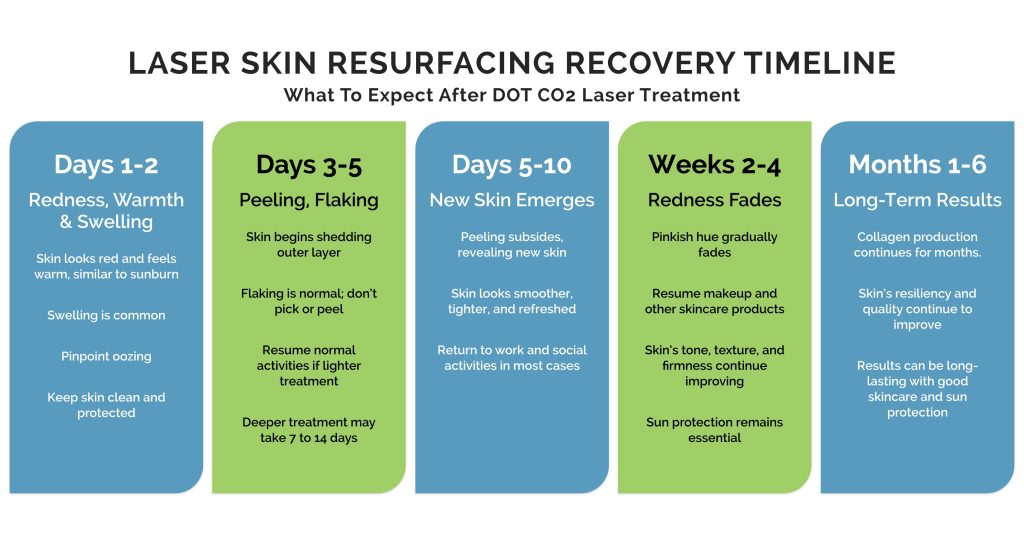
Days 1 to 2: Redness, Warmth, and Swelling
Immediately after CO2 laser resurfacing, the skin typically looks very red and may feel hot, similar to a significant sunburn. Swelling is also normal, particularly if the treatment area is around the eyes. Depending on treatment intensity, there may be pinpoint oozing during the first 24 hours.
During this early stage, protecting the skin barrier is especially important. Patients receive detailed aftercare instructions that may include cool soaks and the use of an occlusive (sealing) ointment to keep the treated skin moist as it heals.
Days 3 to 5: Peeling and Flaking
As the initial inflammation subsides, the skin begins shedding damaged surface tissue. Peeling and flaking may begin within the first 72 hours and become more noticeable over the following several days.
It can be tempting to “help” this process along, but don’t pick, scrub, or peel the skin. Allowing it to shed naturally reduces the risk of infection, scarring, and unnecessary irritation or complications.
For lighter laser skin resurfacing treatments, many patients are ready to resume normal activities within approximately 3 to 5 days. Recovery varies considerably with treatment intensity, however. Deeper treatments may require approximately a week or, in some cases, 10 to 14 days before the skin looks and feels sufficiently healed.
Days 5 to 10: Fresh New Skin Appears
Once peeling subsides, the newly resurfaced skin typically looks smoother, tighter, and brighter, but often remains pink.
At this stage, many patients feel comfortable returning to work and social activities, being extremely careful of direct sun and heat exposure. You can apply makeup once the skin has adequately healed and your provider has cleared you to use it.
Importantly, your results aren’t finished on day 10. CO2 resurfacing stimulates collagen remodeling beneath the surface, so improvements in skin quality can continue developing over the following several months.
How Long Does Redness Last After CO2 Laser Treatment?
The answer depends primarily on treatment intensity and your individual healing response. Moderate redness may persist for several days after a fractional CO2 treatment, but you may notice a pinkish tinge even after the skin has healed. Deeper full-face resurfacing can produce redness that lasts longer.
Persistent pinkness doesn’t necessarily mean something is wrong, especially following an intensive treatment. However, redness that worsens rather than gradually improves, or is accompanied by increasing pain, warmth, drainage, or fever, should be reported promptly.
How To Reduce Redness After Laser Treatment
Following your personalized post-treatment instructions is the best way to reduce redness. Recovery is not the time to experiment with new skincare products or aggressive exfoliation.
Your instructions may include:
- Using cool compresses during the first 12 to 24 hours for comfort and swelling
- Cleansing gently with cool or lukewarm water after the first 3 to 5 days
- Keeping the treated skin adequately moisturized and protected
- Avoiding rubbing or mechanical exfoliation of the skin
- Avoiding strenuous exercise and excessive sweating until the skin heals
- Protecting your face carefully from direct sun exposure
Sun protection is particularly important because newly resurfaced skin is more vulnerable to unwanted pigmentation. Avoid direct sunlight during the early recovery period and consistently use appropriate sunscreen once the surface has healed.
How Can I Speed Up Healing After CO2 Laser?
The best strategy isn’t trying to make your skin heal faster than it naturally can. Instead, focus on creating the right conditions for efficient, uncomplicated healing.
Keep the skin clean and properly moisturized, use only products your provider recommends, and stay out of the sun. You should also temporarily avoid heat, steam, strenuous workouts, and anything else that significantly irritates the treated skin.
What About a Lighter ‘Lunchtime Laser’?
Not everyone needs intensive full-face resurfacing. For younger patients with early sun damage, mild texture changes, fine lines, or uneven pigmentation, we can adjust the laser to provide a lighter treatment, sometimes referred to as a “lunchtime laser.” By using more conservative settings, we can stimulate skin renewal with less downtime than a deeper resurfacing procedure.
This customized approach is also useful for patients who aren’t ready for more intensive correction but want to be proactive about maintaining smoother, healthier-looking skin. Because we can adjust our DOT CO2 laser settings for specific concerns and areas, treatment does not have to be all or nothing.
CO2 Laser Treatments Are About More Than Wrinkles
SmartXide DOT is a versatile technology. In addition to mature full-face skin resurfacing, we use CO2 laser treatment for concerns such as moles and certain skin growths, rhinophyma, and areas of unwanted pigmentation. The ability to customize treatment depth and intensity makes the technology useful for addressing a wide range of concerns, from focused treatment of a small area to comprehensive facial rejuvenation.


Can You Benefit From Laser Skin Resurfacing?
Whether you’re seeking substantial correction of wrinkles and years of Florida sun damage or simply want to refresh your complexion, laser skin resurfacing is a versatile option. At Primera Plastic Surgery, our facial aesthetic specialists customize SmartXide DOT CO2 treatments rather than relying on a single standardized setting. This allows us to balance meaningful improvement with a recovery timeline that makes sense for you.
If you’re considering laser skin resurfacing, request a consultation to learn which level of treatment is appropriate for your skin and what you can realistically expect during recovery. You can also call us at (407) 333-3040.
Leave a Reply